
Mandatory E-Invoicing in Slovakia (2027): How the Peppol Mandate Works and How to Prepare Your Business
Last updated: October 30, 2026
Businesses operating in Central Europe are approaching a decisive digital milestone. Starting January 1, 2027, mandatory e-invoicing in Slovakia will officially replace traditional paper bills and emailed PDF documents for domestic business-to-business (B2B) and business-to-government (B2G) transactions. This transition introduces structured XML electronic invoices transmitted through the European Peppol network.
Designed to modernize administration and close the national VAT gap, the new framework automatically reports invoice data to the Slovak tax authorities in real time as soon as an invoice is issued. Whether you manage a local company, a sole proprietorship, or a multinational finance team with a Slovak VAT registration, understanding the slovakia peppol mandate 2027 is essential to ensure uninterrupted billing.
Why Mandatory E-Invoicing in Slovakia Marks a Major Shift for B2B Transactions
For years, thousands of small and medium-sized enterprises (SMEs) and independent professionals in Slovakia have created their invoices using basic word processors or spreadsheets, sending the resulting PDF files by email. Under the new official tax regulations from the Slovak Financial Administration taking effect on January 1, 2027, a standard PDF file or a scanned image of a paper document will no longer qualify as a valid electronic invoice for covered transactions.
Instead, an official electronic invoice must be generated in a structured XML format compliant with the European semantic standard EN 16931, specifically leveraging peppol bis billing 3.0 slovakia requirements. Because every data field—such as the invoice number, issue date, tax identification numbers, and VAT rates—follows a strict machine-readable structure, accounting software can import and process the document automatically without manual data entry.
Rather than forcing businesses to upload files manually to a single state portal, Slovakia has opted for a decentralized architecture. If you are wondering what is peppol network, it is a secure, international framework that allows for the automated exchange of business documents. To send and receive structured invoices, businesses must connect to this network through a certified service provider, often referred to locally as a “digital postman” or a peppol access point slovakia.
Key Dates and Scope: Who Must Issue and Receive E-Invoices on January 1, 2027?
One of the most important practical aspects of the Slovak reform is the distinction between the obligation to issue structured e-invoices and the obligation to receive them. Even if your business is exempt from issuing XML invoices in the first phase, you will likely still need a Peppol connection from day one.
VAT-Registered Entities: Mandatory Issuance and Reception
Starting January 1, 2027, all VAT-registered entities in Slovakia are legally required to both issue and receive structured electronic invoices via the Peppol network for domestic B2B and B2G supplies of goods and services. Whenever a VAT-registered supplier bills another business entity in Slovakia, the transaction must be transmitted as an XML file through an accredited Peppol Access Point.
Non-VAT Registered Entrepreneurs: Mandatory Reception from 2027
Under the Slovak rollout rules, all entrepreneurs—including non-VAT-registered sole traders, self-employed professionals, and individuals renting out real estate in a business capacity—are required to receive structured e-invoices starting January 1, 2027. Consequently, non-VAT entrepreneurs must register with a Peppol service provider before the end of 2026 to successfully receive their purchase invoices.
The July 1, 2030 Milestone: Non-VAT Issuance and Cross-Border ViDA Alignment
For non-VAT-registered businesses, the obligation to issue structured e-invoices is deferred for three and a half years: they must switch to mandatory e-invoice issuance from July 1, 2030.
That same date marks the second major expansion of the system, fully aligning with the European Union’s VAT in the Digital Age (ViDA) directive. The mandate will extend from purely domestic Slovak transactions to cross-border intra-EU B2B transactions. Transactions with private consumers (B2C) remain outside the Peppol mandate scope, managed via the electronic cash register (eKasa).
How the Slovak Peppol Model and Real-Time Tax Reporting Work
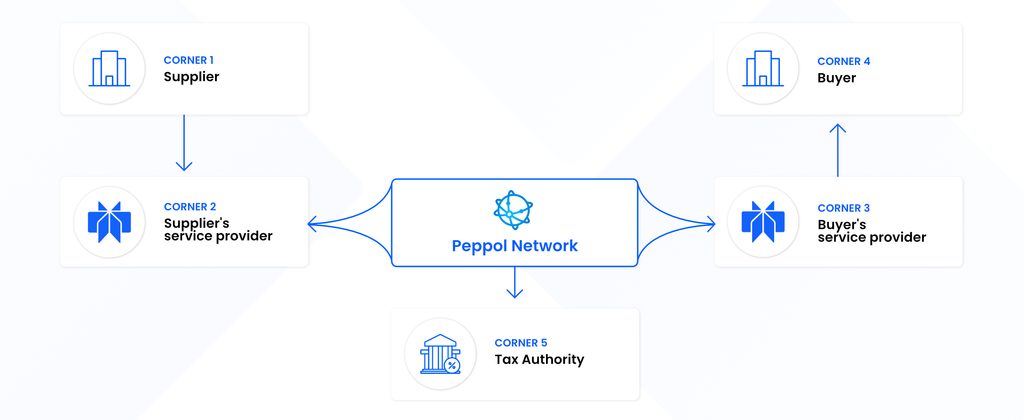
Slovakia’s adoption of the Peppol network follows the internationally recognized 5-corner model. The process flows seamlessly through certified Access Points:
| Corner 1 | Supplier | You create your invoice in your ERP or billing system. |
| Corner 2 | Supplier’s Peppol Access Point | Your provider validates the XML file against EN 16931 rules and converts it if necessary. |
| Corner 3 | Recipient’s Peppol Access Point | The invoice is delivered securely to your customer’s chosen provider. |
| Corner 4 | Buyer | Your customer receives the structured XML invoice directly in their software. |
| Corner 5 | Slovak Financial Administration | The Access Point enables slovak financial administration e-invoicing compliance by transmitting the required tax reporting data in real time, giving authorities immediate oversight without separate manual declarations. |
Four Practical Steps to Prepare Your Invoicing Workflows Before 2027
Whether you issue hundreds of invoices daily or receive a handful monthly, take these four structured steps before the end of 2026:
- Map Your VAT Status and Transaction Flows: Confirm whether your Slovak entity is VAT-registered (issuance and reception in 2027) or non-VAT-registered (reception in 2027, issuance in 2030).
- Audit Your Customer and Supplier Master Data: Structured Peppol XML invoices require accurate company identification numbers (IČO), tax identification numbers (DIČ), and VAT numbers (IČ DPH).
- Select a Certified Peppol Access Point Provider: Evaluate e-invoicing platforms based on ease of registration, automated validation, and multi-country compliance capabilities.
- Join the Voluntary Testing Phase: Connect your account during 2026 and test sending and receiving structured invoices with key business partners before the mandate goes live.
Connect to the Peppol Network in Slovakia Seamlessly with B2Brouter
Complying with mandatory e-invoicing does not require complex ERP overhauls. As an accredited Peppol Access Point with extensive European experience, B2Brouter gives your business an intuitive, ready-to-use platform to send and receive compliant e-invoices from day one.
With B2Brouter, you can generate, validate, and transmit XML invoices directly from your browser or integrate via API. Every document is checked against European standards before transmission, ensuring zero technical rejections. Create your free B2Brouter account today and get your business ready for the January 2027 Peppol mandate in minutes.